


I recently sat across from a roomful of VCs to raise a Series A for one of my companies. They passed. Fine. I have built a lot of companies and been told ‘no’ more times than I can count. You just need one to say yes. You kiss a lot of frogs on your way.

I am used to VCs disagreeing with my theory of the case. They read the market or the timing differently than I do. Most days I learn something from a pass.
This was not one of those moments. It was a roomful of people offering an unknowing admission that they do not understand the technology they are looking to fund. How it works. Where value accrues. What a defensible thesis even looks like.
These are the same people who refuse to fund anything but AI.
That room is not an outlier. The people deciding which AI companies get funded have only the vaguest understanding how it works and how to build it.
I walked into that room to raise money. I walked out more convinced than ever that what founders really need is to raise way less of it.
You need less money. You just do.
Bigger is not better. Bigger is a valuation you can’t grow into. Bigger is more RIF’d employees when the markup doesn’t hold. Bigger is less of the pie for you and the employees rolling up their sleeves and building, not just betting.
The math
Fifteen years ago, you went to a VC for $30 million to build a data center. The cloud killed that jig. The cost of starting a software company collapsed roughly 10x, and the venture industry has been absorbing that hit ever since.
AI engineering collapses it another 50 to 100x. Not 10x. Fifty. The solo-founder billion-dollar company isn’t a thought experiment anymore. If you’re an AI engineering company, and most of us are, you are exploiting a magnificent substrate that somebody else paid to build.
The implication VCs don’t want to say out loud: founders need fewer rounds of less capital, and some of them won’t need to raise at all. The implications for most VC’s are grim. The majors funding the foundation models will be fine. They need to write $50 billion checks and only a few institutions on the planet can. The rest, the people who built businesses on the data-center jig and then pivoted to the SaaS jig, are out of jigs.
The moment: the gate is AI, and the gatekeepers don’t know AI
AI is the binary filter for capital right now. If “AI-first” isn’t in your first slide, you don’t get the second meeting.
The craft of venture has always rested on what the good shops call theory of the case: a disciplined hypothesis about where value will accrue, argued over and updated by other partners. Right now nobody has a prepared mind. The contours of the industries to be disrupted are moving week over week. Whatever theory of the case the people writing your check have, it’s probably not an AI theory of the case.
What they are running in place of a thesis is the same five cockpit-check questions that worked in 2018 vertical SaaS: who’s the buyer, is the buyer the user, what’s the training data, where’s the moat? Those questions are relevant still, but they don’t get the whole job done.
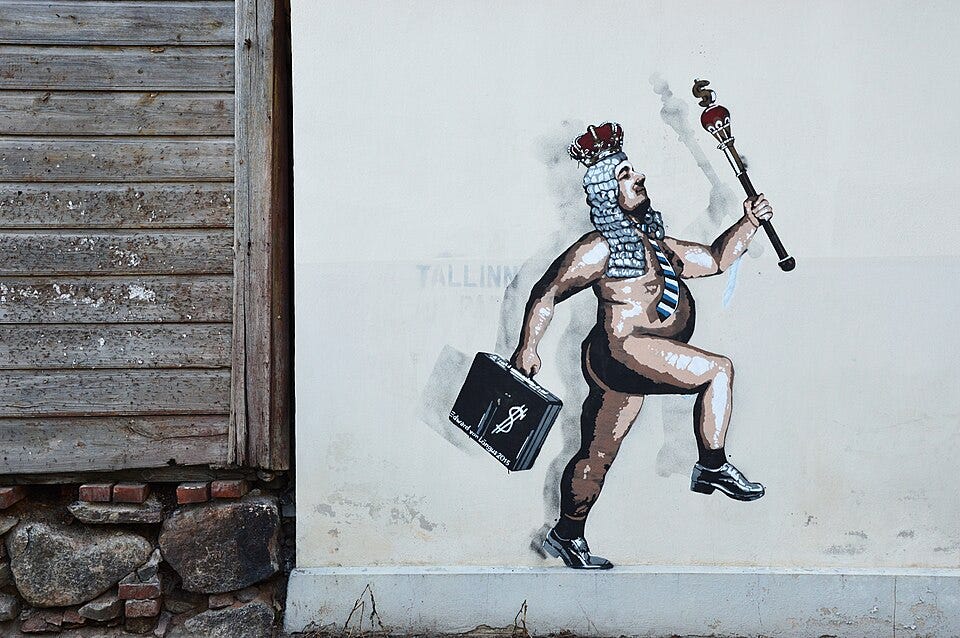
When you pitch an AI-first company to someone running the old checklist, you are going to walk out of the room feeling like you failed the interview. You didn’t. They did. Sometimes the emperor really is naked.

The move: don’t get confused for an LLM
Exactly one group legitimately needs huge checks right now: the foundation model companies. They are building the substrate. They need hundreds of billions to do it.
The rest of us are not them. Your real number is closer to $10 million. They will try to put $60 million in.
The honest update would kill the fee draw: you need less from us. So you get the dishonest one. VCs get paid on deployed capital, not on companies that work. Bigger funds, bigger fees. They need to push more dollars regardless of whether you can absorb them. The LPs keep writing the check. (Read: teachers’ pensions, university endowments.)
This is the move to watch for. A VC trying to fund you at foundation-model scale when you are building on the substrate.
It is easy to get sucked into the vanity of the big number. It looks good in a press release and a TechCrunch headline and an investor deck. The marquee feels like proof you have arrived.
In this new paradigm, that vanity is going to sour fast.
A big number used to say I am smart, and this company is going places. Now, to anybody paying attention, it’s beginning to say the opposite.
The marquee you hang your hat on will become the marquee that hangs you.
The valuation you cannot grow into. The markup your next investor will not honor. The math your employees pay for when the RIF comes. The LPs eat the loss. You eat crow. Everybody in the cap table eats the down round. The VC raises another fund.
Build, don’t bet
The right round is the smallest round that gets you to the next defensible milestone with real customers paying real money. If the partner across the table is pushing more capital than you can deploy with discipline, they are solving their problem, not yours.
Don’t be flattered when they want to put more dollars to work than your business can absorb.

Don’t be deflated when they ask naive questions about your AI-first company, or pass for reasons that reveal more about them than about you. Both signals point to the same thing: they have not done the hard work to update their approach for the AI era, and they are hoping you don’t notice.
Sometimes the emperor really is naked. Your job is not to let his nudity translate into your despair.
Whatever happens next in software, it ain’t going to be the same old shit. Build accordingly.