


My Take
I told my board recently that if I could start Ketch over, I’d start it three years later. The bet was right. The clock was wrong.
In 2019, we started building privacy infrastructure on the thesis that customer data would become a strategic asset for every B2C company that touched the internet. The market wasn’t there yet. Buyers treated privacy as a compliance line item: buy the cheapest thing that gets the lawyers to stop sending memos, slap a cookie banner on the site, move on. Nobody was looking for infrastructure. Lawyers wanted what they already knew how to buy. Regulators were still drafting.
It’s finally catching up. Harvard Business Review ran a piece last month based on a Journal of Marketing study of 280 brands over four years showing that the ones who take care of their customers’ data outperform the ones who don’t. And not by a little.
The buyers are moving. The regulators are moving.
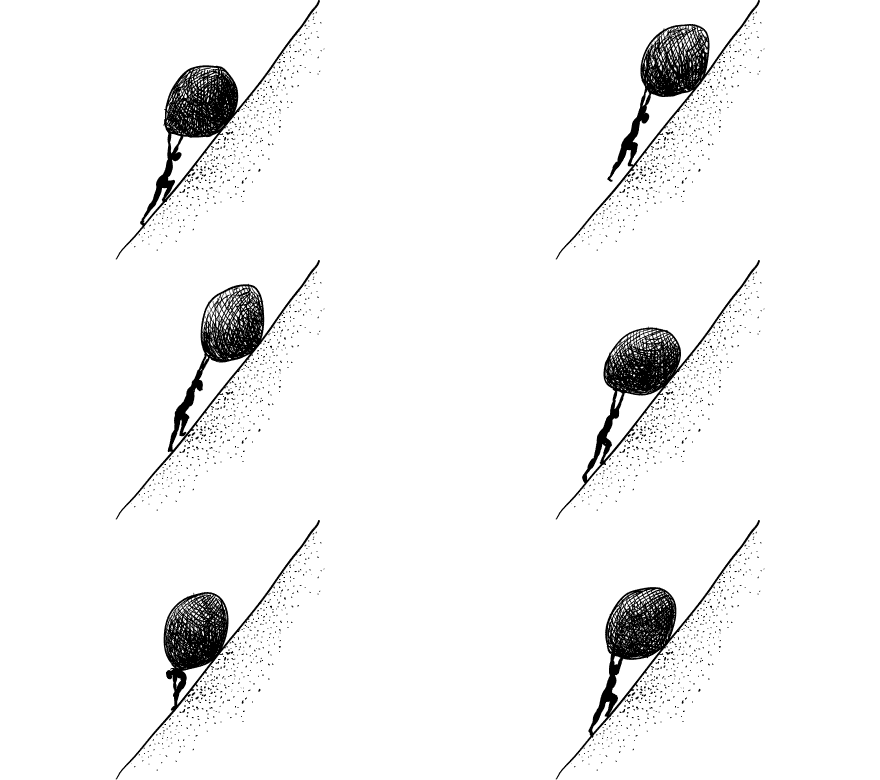
Still, being early was very expensive. Not just in cash burned, but in years spent and hairs gone grey in service of the cause. It meant eating a steady picnic of shit sandwiches while rolling a Sisyphean boulder up a hill nobody else could see.
Every founder gets told the most important question is whether you’re solving the right problem. Probably. But there’s a killer caveat: solving the right problem is a meager consolation if you’re doing it at the wrong time.
Here’s another terrifying fact: You can do everything right and still realize you’re early after you’ve raised.
Some of you reading this are in that exact place. You’re in the game AND you’re right AND you’re early.
What to do?
I’ve got seven ideas for you. Five of them are things I’d do differently. Two I’ve had right from the start: refusing to pretend, and holding a grudge.
1. Talk to thirty customers before you get started.
Not three. Not ten. Thirty. We didn’t do enough of this. It’s now a rule for every company we start.
Most founders at this stage are doing idea validation: does this sound cool, would you theoretically use it. Or in our case, we understand the problem and its solution, so of course everyone needs it now. That’s not the test. The test is readiness. You’re not asking whether the fish are in the pond. You’re asking whether the fish are hungry.
2. Don’t smoke your own stash.
We built a better mousetrap. The architecture was right. It didn’t matter. Our buyer at the time was usually a lawyer, and lawyers often didn’t understand why cookie banners wouldn’t solve their privacy problem. We didn’t take the buyer’s psychology into account seriously enough: lawyers like to be right, and they’re trained to give counsel and direction to others – not to receive it from vendors like us. When checking the box seemed to be working for every other company, they couldn’t make the case that more than status quo was necessary or fiscally sound.
Buyers in a not-yet-ready market rarely say we don’t have that problem. They say we’ve got it handled. They bought the cookie banner and considered the matter closed. That’s worse than denial. If they denied the problem, you at least have a chance of persuading them otherwise. You can’t educate someone who thinks they’re already done.
The buyers who don’t say it turn into something worse: a long, soul-sucking, pride-swallowing siege you might still lose at the end.
You can be right about the problem and still lose. Adoption isn’t logical.
3. The credentialed insider hire is critical. And almost everyone misfires on it.
You need the domain veteran. The one who knows the secret handshakes and industry jargon, who VIPs take calls from, and who translates your story into the buyer’s dialect. Real job, important job.
But their rolodex, their vocabulary, and their reputation are table stakes. The price of admission, not what you’re actually buying. What you’re buying is someone willing to spend some of their reputational capital on YOU. To walk into rooms where their name carries weight and say these people are worth your time while you’re still small enough that saying it costs them something.
4. Course-correct on what the market will actually pay for.
We got precious about the elegant product. Meanwhile, the market was happily buying the pedestrian thing: the checklist assessments the lawyers wanted. We didn’t ship a serious version of the pedestrian thing until year four.
That’s founder vanity. It costs money no startup can afford. Ship the boring thing first. Sell the elegant thing in year three.
5. Cut decisively, not timidly.
At my first company, as a first-time CEO, I was terrified by layoffs. My fear led me to delay hard choices in service of wishful thinking, and it hurt EVERYBODY. My first layoff was 10%, followed some months afterwards by another 20%. Then more. By the time I was done, I’d cut more than half the company in three rounds instead of one.
It’s a bad move. The company starts feeling like an Agatha Christie novel. And then there were nine. And then there were seven. Monday mornings turn into a quiet count of who’s still at the table. You think you’re being humane by going slow. You’re doing the opposite. You are making everyone who stays through the layoff live through it three times instead of once… and you’re putting them in a position to constantly wonder if they’re next.
The middling path never works. One clean cut is kinder than three tentative ones. The speech on the day matters. Something like: This sucks. We don’t have these customers. We have this capital. We need to do these things. You’re still here. That’s because you are the future we are betting on. Full stop.
You’re going to sound like a bloodless capitalist but the people who you’re betting on can put all of their focus into doing the work, instead of constantly wondering if they’re going to get axed next.
6. Reality is the safest place to be.
The only way I’ve found to lead people when you’re going through hell is by refusing to pretend. My investors tell me their portfolio companies run twenty to twenty-five percent annual attrition across the board, winners and losers alike. In six years of operation, Ketch has seen three cases of unwanted attrition across the hundreds of hires we’ve made. Even when we definitely weren’t winning.
I’m really very proud of that. But it’s not rocket science. If you level with people about where you are, they can choose to stay. If you spin them, they will leave the first time reality contradicts the spin.
7. Stay mad at the ones who peaced out.
Investors who peaced out at the bottom. Advisors who went quiet and conveniently disavowed the company. Employees who told other employees at the water cooler that it was time to bail and wrote scorchers on GlassDoor on their way out. Build the spreadsheet in your head now. On whatever-the-day-is day (acquisition, IPO, the-day-the-market-finally-caught-up day), you send an email with the exact number their stake would have been worth.

I keep spreadsheets like this. I’ve sent emails from a special account with exactly these messages. It feels so good to send them.
Righteous indignation is fuel. A chip on the shoulder is part of a founder’s caloric intake. Don’t let the doubters grind you down.
The psychology of not winning
Being early is purgatory. You’re definitely not winning, but you’re not losing, either. You’re just… stuck. Waiting. You wake up, move the boulder six inches up the hill, and go home. The next day, if you’re lucky, the boulder has only rolled five inches back down the hill. (I did say it was Sisyphean, after all.)
Most founders don’t break on the really, really hard days. That’s fuel. We break on the purgatory days that turn into weeks or months or years or eternity.
Most bets die in the valley. Not every right-bet-wrong-time founder gets to the other side. Very few do.
I’m not sure a first-time founder could have survived what we survived. A first-time entrepreneur doesn’t have the track record to persuade investors to stick around when things get thin. They don’t have the experience to know that thin can be temporary. They don’t have the experience to tell which VCs have the fortitude to hold steady. I had all of that. I still watched one of my lead investors peace out when the going got rough.
None of that means the posture is acceptance. A real founder dies with a gun in his hand. The math is brutal and the odds don’t care about you. You fight anyway; that’s your job.
Usually the bet dies, even if it was a good one, because investors don’t have the attention span or the tenacity to stick with it. This is the curse and the challenge of being early. But for those who stick it out, your company will be worth an amount of money at the end that puts a smile on the faces of your investors and employees.
And what about the love notes you send at the end to those who turned their tails and bravely fled? Well, those are priceless.
This is an excellent post Tom. Really enjoyed it and relate to everything you’re sharing.
Thanks for sharing. Would you say that 20-25% attrition is standard for early-stage tech companies?