


Last week I told you to strap in, light candles, and be ready for anything. I talked about FBI agents hauling off ballots and ICE loitering in polling-place parking lots. And then Wednesday happened.
In the annals of wrongology, my post last week should occupy a Top 10 position – and I couldn’t be happier. If you’re not living under a rock, you already know what happened so I’ll keep it short: Democrats took the House and the Senate, flipping seven Senate seats from Maine to Texas, and on election night the President told The New York Times he was willing to accept the results.
So I was 100% wrong, and I’m thrilled, but the election settled one question and opened another one that’s consuming a lot of my attention right now.

Lookback risk
A year ago I wrote a piece for Fortune about Marc Benioff, who had just told The New York Times he’d welcome Trump sending the National Guard into San Francisco. I know Marc a little (I sold a company to Salesforce and got to know him as a shrewd, long-term thinker), which is why his comment surprised me.
In that piece I borrowed a term I learned from Goldman Sachs: lookback risk. It’s the negative consequence when people in the future re-evaluate and re-intrepret today’s facts against retroactively applied future standards. Decisions that feel necessary in the moment are frequently repriced by history, so that a short-term hedge turns into a long-term liability once norms and memories reset. I also pointed out – and it wasn’t a deep point – that American politics swing like a pendulum, and incumbent presidents, this one included, tend to get their heads handed to them in midterms.
To his credit, Benioff repriced fast, rescinded his statement, and apologized. He got out of an untenable trade, took a few licks, but he’s okay. Others doubled down. So to all the tech oligarchs who bent the knee over the last two years, and Jeff Bezos and Mark Zuckerberg particularly come to mind, I have a question: what do you do now?
Conversations with myself
The job of a CEO is to see around corners. You’re supposed to contemplate every angle and every path through the decision tree, with all the uncertain outcomes dangling out there at the leaves. That’s true in any industry, but it’s doubly true in tech, where technologies, opportunities and market dislocations happen at insane velocity. If you don’t game it out, you’re a lemming on a ledge, about to get bonked on the head with a big rock.
I’ll confess something. I have conversations with myself all the time, and if anyone overheard them they’d have me committed. They go something like this: “Okay, I do this, then they’ll do that. Then I say this, and they come back with the other thing, and... oh, shit, that won’t work. Back to the leftmost part of the decision tree. Try something else.”
It sounds crazy, but it’s useful. You’re running simulations of what could happen so you aren’t caught flat-footed by what actually happens. You walk every branch, including the ones you don’t like, including the one where the guy who’s powerful today isn’t powerful tomorrow.
What were they thinking?
Or more precisely, why weren’t they thinking?
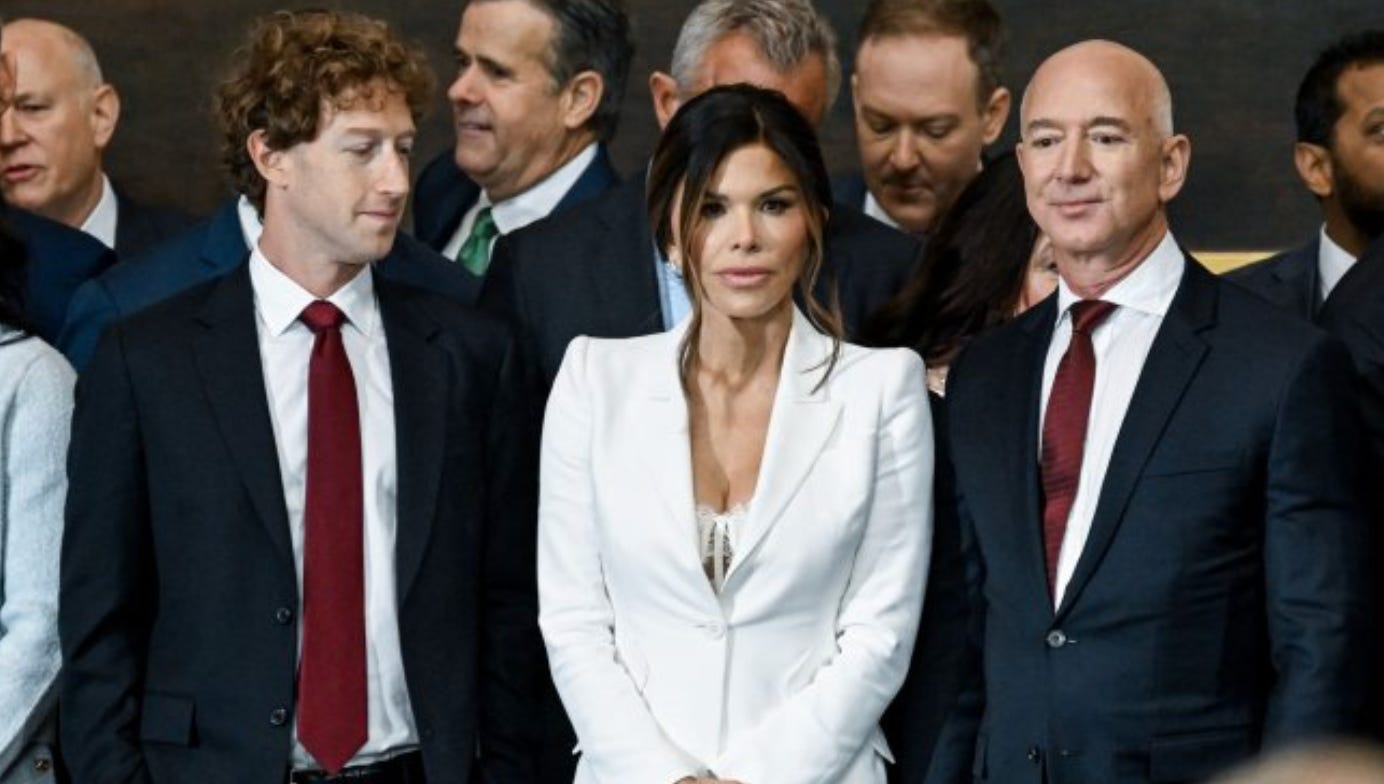
Zuckerberg settled Trump’s lawsuit over his Facebook ban for $25 million, $22 million of it earmarked for Trump’s presidential library, and Trump’s own lawyer said the two of them hashed out the deal directly. In the same stretch, Meta killed its fact-checking program and put Trump pal and UFC boss Dana White (who might become the White House’s next press secretary) on its board.
Bezos blocked the Washington Post’s presidential endorsement and then decreed that the opinion section would stick to personal liberties and free markets. More than 75,000 digital subscribers canceled within 48 hours. Amazon went on to spend $75 million on a Melania documentary, which Bezos says he had nothing to do with. The documentary bombed.
Big-name law firms like Paul Weiss, Skadden and Willkie Farr cut deals with the White House. Firms that fought the same executive orders in court won.
Of course I disagree with what all of them did. But that’s not what has me stupefied. What stupefies me is that people this smart did it at all. These are some of the highest-IQ operators on the planet, running companies that thrive or wither as a result of second- and third-order effects. And on the single biggest political variable of their tenure, they ran a decision tree with exactly one branch on it: Trump stays strong forever, and he remembers who was nice to him.
That’s the greedy algorithm I wrote about a while back. Optimize the next step, grab whatever looks biggest right in front of you, never lift your head to see the shape of the curve. It works fine until the curve bends.
On Tuesday it bent. Senator Ed Markey warned tech executives that Congress will have to plant new forests for all the subpoenas it plans to print. The protection they paid for just expired.
Elon’s Texas problem
Then there’s Elon, who deserves his own section because he managed to make the worst version of this bet twice.
First he decided the liberal wackjobs of California were too much to bear and moved his empire to Texas. Tesla’s headquarters and its biggest U.S. factory are in Austin, SpaceX launches from Starbase down in South Texas, and Neuralink and The Boring Company are headquartered there too. Then he spent somewhere around half a billion dollars on the midterms, about $225 million of it in Texas alone in failed attempts to block Talarico and advance Paxton, to keep his new home red.
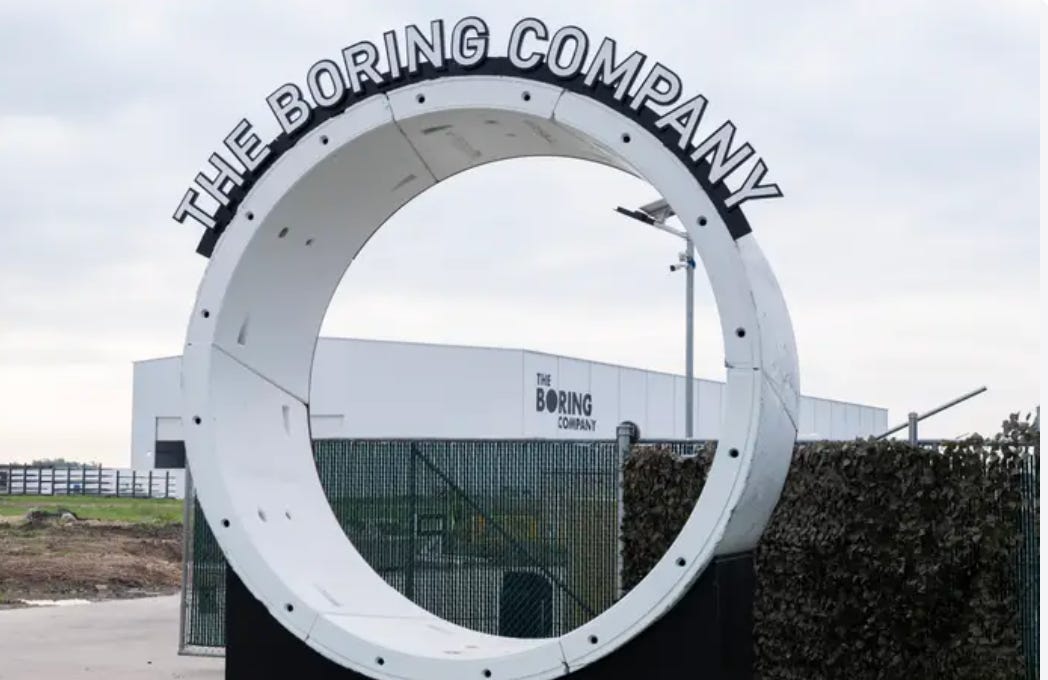
On Tuesday, Democrats won every statewide office in Texas. The governor-elect, Gina Hinojosa, ran against Musk practically by name. Democrats will likely control the appeals court that hears cases out of the Texas Business Court, which matters if Elon wants to merge Tesla and SpaceX. And Cameron County, home of SpaceX’s launch site, went for Talarico over Paxton 68 to 30. His own neighbors voted against him.
The market priced all this in about 48 hours. Tesla and SpaceX shed roughly $456 billion in combined market value by Thursday’s close.
To be fair, Hinojosa says she’ll work with him, and Trump still controls the federal agencies that hand SpaceX its contracts. But here’s a man who fled a blue state, bet half a billion dollars that his adopted state would stay red, and now gets to explain his tax breaks to a Democratic governor, a Democratic attorney general and a Democratic Congress, all at once.
Woops.
The one who gamed it out
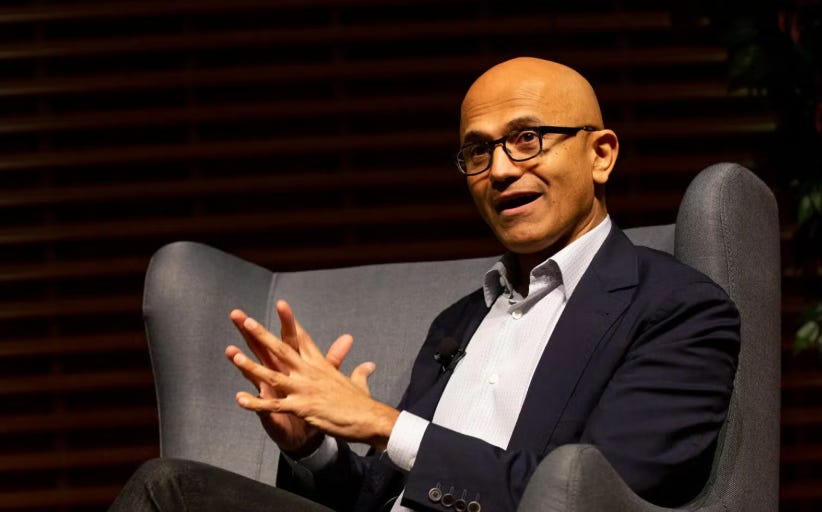
Now contrast all that with Satya Nadella, who navigated this mostly the right way.
The clearest proof is a personnel decision. In September 2025, Trump went on Truth Social and demanded that Microsoft fire Lisa Monaco, the company’s president of global affairs, who’d been Biden’s deputy attorney general. Microsoft declined to comment and kept her. More than a year later she’s still in the job, out representing the company at the World Economic Forum. Zuckerberg wrote a $25 million check to get into the tent. Nadella wouldn’t sacrifice one of his own executives to stay in it.
He also kept the relationship where it belonged, on business terms. When he and Brad Smith went to Mar-a-Lago, the visit was pitched as a conversation about cybersecurity, tech policy and Microsoft’s $80 billion AI infrastructure build, most of it in the U.S. Early in the term, when the Stargate spat broke out, he stayed out of it and held his tongue. No personal settlements, no rewritten content policies, no gutted editorial page.
And he paid a price for it. In October, JD Vance suspended Microsoft from the federal PERM green-card program and accused it of replacing laid-off Americans with foreign “indentured servants.” Nadella took the hit and hasn’t said a word about it publicly.
In Trump’s first term, Microsoft was one of the first companies to join the states’ lawsuit against rescinding DACA. Nadella had already walked this branch of the tree once, and he knew where it led.
My read is that Nadella treated Trump 2 as a geopolitical risk to be managed, not a patron to be courted. At Microsoft’s scale, reading and navigating that kind of risk is part of a CEO’s fiduciary duty, and he did his job without handing over anything he’d be embarrassed to explain to a Democratic Congress, a European regulator, or his own employees.
I do wish he’d kept the checkbook closed. Microsoft gave $1 million to the inauguration fund and $10 million to the White House ballroom. I’d have loved to see a company that size show it didn’t need to. But I’ll give him this: when the cameras panned across the row of tech titans seated behind Trump on Inauguration Day, Satya wasn’t in it. I was happy not to see him there.
Soil conditions
Free and fair markets and a working democracy aren’t political preferences. They’re the soil conditions every American company grows in, including the companies run by the people who just spent two years making strange bets and failing to think things through.
You can hedge against a president. When you start hedging against democracy, you’re trading away the very asset that made you rich in the first place.
The pendulum always swings. CEOs who game it out walk that branch of the tree before it happens, and navigate like Satya. Everybody else gets dog-walked afterward, under oath, before a congressional committee.
Great piece. Wise words: "The pendulum always swings. CEOs who game it out walk that branch of the tree before it happens, and navigate like Satya."