


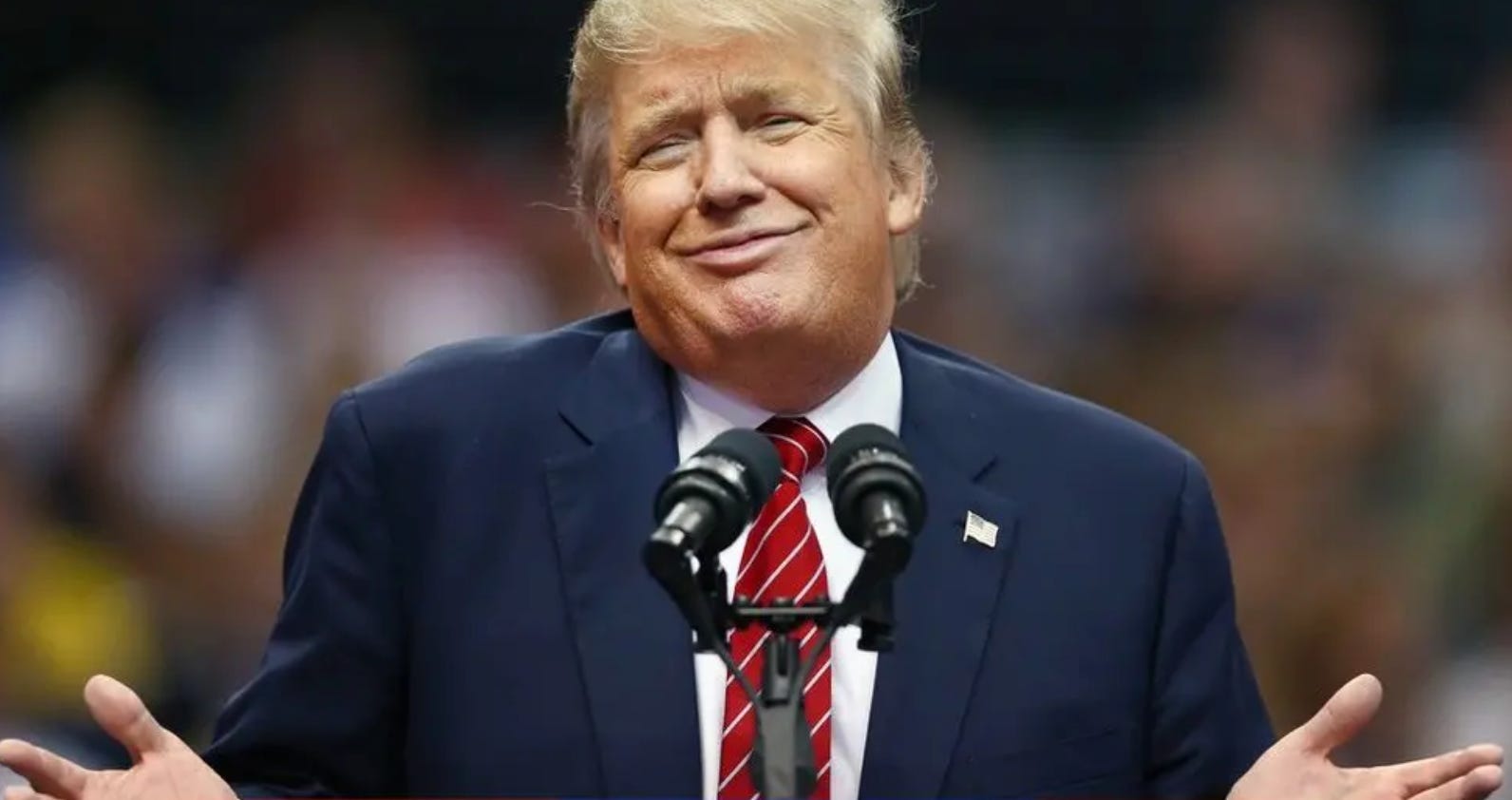
Six years ago this month, Chris Krebs did his job.
Krebs ran the Cybersecurity and Infrastructure Security Agency, the outfit created under Trump’s first administration in 2018 to protect our elections from hackers and foreign meddling. After the 2020 vote, he told the country that it was the most secure election in American history. There was zero evidence of rigged machines or stolen votes.
Trump fired him with a tweet.
That was Trump 1. Throw a hissy fit, fire the messenger, move on to the next brawl. The new playbook for Trump 2, in keeping with Project 2025, is organized, retaliatory, and pre-emptive. In April 2025, the President signed an order directing the Justice Department to investigate Krebs. He stripped Krebs’s security clearance, and for good measure yanked the clearances of everyone at the cybersecurity company where Krebs worked. Krebs resigned to fight it. Homeland Security then pulled his Global Entry card, saying he was under investigation.
His crime, as near as anyone can tell, was telling the truth about an election.
Keep Krebs in mind this week. He’s a patriot and an inspiration to every election official in America working to preserve democracy amidst an onslaught of petty, pointless lawfare and police-state methods.
Before the game, not after
In 2020, Trump fought his loss after the fact. Lawsuits, pressure on Congress and state legislatures, and finally a mob on January 6. Ugly, but thankfully too little, too late. As the Dartmouth political scientist Brendan Nyhan points out, he never used the powers of the presidency to rig that election in advance. And when he leaned on the people who held those powers, men like Attorney General Bill Barr didn’t play along.
Trump 2 does it different. This year boot-licking subordinates all said yes. The Justice Department, Homeland Security, the FBI, even FEMA have all been put to work squeezing state election officials, months before anyone cast a ballot. Nyhan calls it what it is: the same move authoritarian populists run in countries like Russia and Belarus.
In 2020, he tried to change the score after the game. In 2026, he’s trying to pick the players before kickoff.
Read the Constitution, please
Article I, Section 4 of the Constitution gives the states the power to set the times, places and manner of congressional elections. Congress can change those rules by passing a law. The President’s role is zero. The Framers spent a sweltering summer in Philadelphia arguing about how much power to hand the executive, and on this one they were crystal clear: keep him out of it.
Fueled by an abiding commitment to the U.S. Constitution, Trump decided otherwise. In August 2025 he posted on Truth Social that the states are merely an “agent” of the federal government when they count votes, and that they must do whatever the President tells them. His post:
“Remember, the States are merely an ‘agent’ for the Federal Government in counting and tabulating the votes. They must do what the Federal Government, as represented by the President of the United States, tells them, FOR THE GOOD OF OUR COUNTRY, to do.”
He isn’t even pretending to disguise the motive. He has told Republicans that unless they purge the “millions and millions” of noncitizens he imagines are voting, they’ll never win another election.
Take that in. The President of the United States is telling his own party that the way to win is to redefine who gets to vote.
0 for 27
The Justice Department sued 30 states and the District of Columbia to get their full, unredacted voter rolls: driver’s license numbers, partial Social Security numbers, birth dates, phone numbers, emails. (All of this tramples on our privacy protections as citizens, but that’s subject for another post.) Twenty-seven district judges, many of them appointed by Trump, have ruled. The DOJ has lost all 27.
It keeps going:
The national purge program. In October, a federal judge in Washington threw out the DOJ’s whole scheme to collect voter files, run them through immigration databases and tell states whom to strike, even in the states that had cooperated.
The 20,000 California ballots. The DOJ asked courts to set aside the mail ballots of 20,000 Californians it called likely noncitizens. A district judge said no. The Ninth Circuit said no, twice, with a Trump appointee in the majority.
Alaska. The DOJ asked a judge to block certification of the Senate race if the Republican incumbent loses narrowly, because a retired teacher with the same name is on the ballot. Trump said he ordered that lawsuit. A federal judge tossed it on Sunday.
The money threat. Homeland Security tried to cut FEMA security grants to states that didn’t follow its election rules. Another judge blocked it.
The executive orders. The courts gutted the most consequential parts of both, mostly on the grounds that the President has no authority to issue them in the first place. See Article I of the Constitution.
David Becker used to be a senior trial attorney in the DOJ’s voting section and now runs the Center for Election Innovation & Research. He told Barton Gellman in a recent New Yorker article he could discern no coherent strategy, just competing directives from DOJ and DHS, and a string of courtroom losses without a single win.
His summary: “There’s malevolence, but there’s a lot of incompetence.”
So why do they keep at it? Because winning in court was never the point. The lawsuits generate headlines. The threats menace the people who run elections. And every loss becomes a talking point for the story they want to push on November 4th. “Election officials cheated, and the judges let them.”
Run the numbers
Trump’s malevolent campaign rests on one claim: millions of noncitizens are voting. So let’s put the numbers to it.
Nevada. The administration said there were nearly 16,000 noncitizens on the state’s rolls. It produced 185 names it said it had manually verified as aliens. In September, state officials checked every single name. All 185 were U.S. citizens.
California. In July, Homeland Security said roughly 200,000 noncitizens were registered in the state. By October, the DOJ’s list was down to about 20,900 names. Then UCLA researchers ran that list against the actual state voter file. More than 8,800 of the names aren’t registered to vote in California at all. Los Angeles County pulled a sample and found that about one in four listed the United States as their birthplace. A federal judge found the government’s method not credible. The appeals court agreed.
200,000 became 20,900. Then 42% of the 20,900 turned out not to be voters, and a big chunk of the rest were born here. If this were a sales funnel, every stage would convert at zero.
For scale: one study of the 2016 presidential election found noncitizen ballots ran at about one in a million.
To be fair to the other side: the DOJ says it’s still investigating individual cases in Nevada, and it announced charges against 28 California residents in October. The White House says it’s protecting elections by prosecuting election crimes. Fine – but then prosecute an actual crime. 28 cases in a state with about 23 million registered voters is a vanishingly small rounding error more decimal points to the right than you can reliably count, not a stolen election.
The EZ problem
My last name ends in EZ.
So do Martinez, Hernandez, Rodriguez, Gonzalez, Lopez and Sanchez. Lists like the ones the administration keeps waving around have a way of filling up with names like ours.
The government’s lists flag a voter as a probable match when a first and last name line up with a birth year and a street name or ZIP code. There is no master list of American citizens, and people who naturalized years ago still sit in old immigration records as noncitizens. Run your search for voting crimes against a population with common surnames and you get collisions by the thousands. They land on people with names like mine.
Florida’s 2012 purge flagged about 2,700 suspected noncitizens, and more than 80% of them were people of color. A federal appeals court later ruled it illegal. Texas flagged roughly 95,000 “suspected noncitizens” in 2019. Thousands turned out to be naturalized citizens. The state settled, and the secretary of state who launched it resigned.
California has the largest share of naturalized citizens of any state, roughly one in five eligible voters. On Saturday, Judge Tanya Chutkan asked the DOJ point-blank why its lists seem aimed at states with more citizens of certain descent. On Friday, another federal judge, Trina Thompson, barred DOJ and DHS from threatening California election workers into tossing ballots, citing the federal laws against voter intimidation. The plaintiffs in that case pointed out who bears the brunt: Latino voters and naturalized citizens.
It offends me. It should offend you too, whatever your last name.
What can still go wrong
So they’re losing. Let’s be clear-eyed anyway. Losing in court doesn’t mean bad shit can’t happen this week. Here’s what I’m watching.
The FBI takes the ballots. We’ve already seen the dress rehearsal for this scenario. In January, dozens of FBI agents raided Fulton County, Georgia, and hauled off more than 650 boxes of 2020 ballots, tabulator tapes and records. Trump’s Director of National Intelligence came along for the photo op. In June, about a hundred FBI and DHS agents raided a voter-registration group in Cleveland. Neither raid has produced a single charge. And this week the DOJ served grand jury subpoenas on local election officials across California.
A ballot is only as good as the unbroken record of who has touched it. It’s what election workers call chain of custody. Break it for even an hour and you can no longer prove what’s in the box. If they break the chain of custody, we’re fucked.
ICE at the polls. Federal law makes it a crime to station troops or armed men at a polling place. In March, at a meeting of the Conservative Political Action Committee, Todd Blanche, earnestly asked, “Why is there an objection to sending ICE to polling stations? Illegals can’t vote.” He has since been promoted to Attorney General.
DHS says it has no plans to target polling places. But its Secretary, Markwayne Mullin, says agents will still go in to serve a warrant or answer a threat. Steve Bannon wants ICE to surround the polls. During the primaries, ICE agents reportedly ran operations near polling sites in San Antonio and Ventura County.
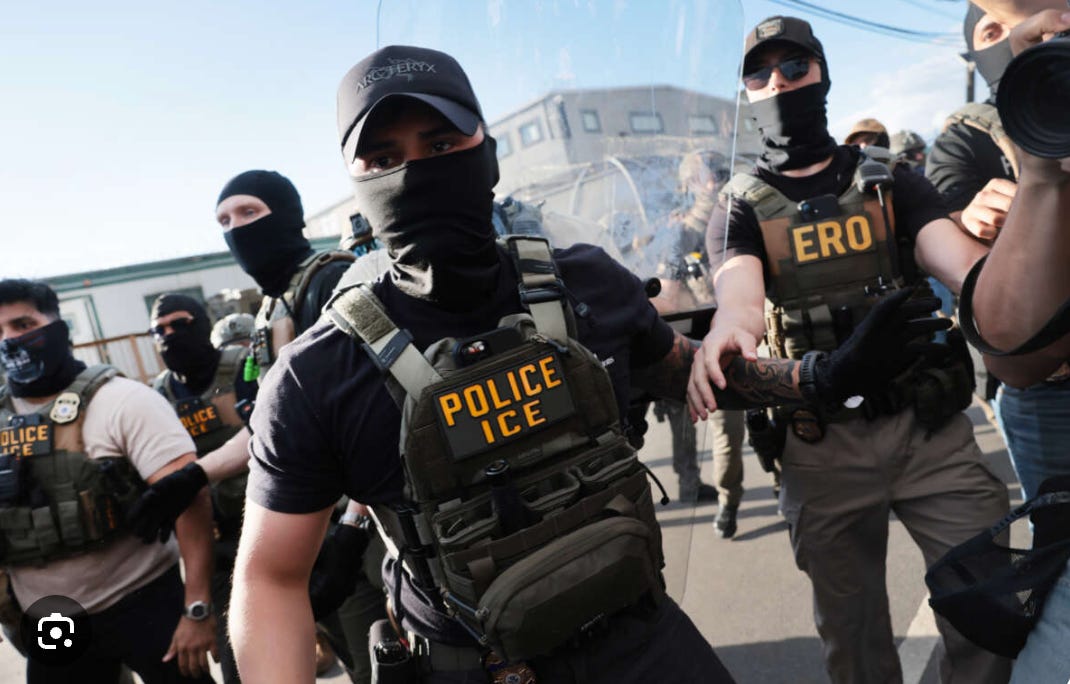
They don’t need to send ICE to every precinct. They need enough voters to believe they might. Millions of Latino citizens live in mixed-status families. An agent dispatched like the Gestapo to menace one polling place sends a message to all of them.
The fight after the count. The Alaska suit was a dress rehearsal for challenging certification. Blanche has already threatened California-style suits against live ballots in several states.
The people holding the line
Now for the part of this story that should lift your spirits.
If one thing has kept the President’s hands off our elections, it isn’t Congress, and it’s certainly not the cronies in his Cabinet. It’s a few thousand people most of us couldn’t name. Secretaries of state. County clerks. Poll workers, many of them retirees, working a 14-hour day for a token stipend and a sticker. There are more than ten thousand voting jurisdictions in this country. A third of local election officials say they’ve been threatened, harassed or abused because of their work. Half say they fear for their colleagues’ safety.
They keep showing up anyway.
In September I wrote that “great team” is noise and a name is a signal. So here are names.
Deidre Henderson, the awe-inspiring, utterly heroic lieutenant governor of Utah.
Adrian Fontes in Arizona.
Shirley Weber in California.
The county clerks in Salt Lake and Los Angeles and Fulton.
The judges, Trump appointees among them, who uphold the Constitution and rule of law : David Barlow, David Carter, Sparkle Sooknanan, Sharon Gleason, Mark Bennett.
And Chris Krebs, who told the truth six years ago and is still paying for it.
Thank you, every one of you.
If you know a poll worker, hug them or give them a high five this week.
---------------
Malevolence explains why they keep trying. Incompetence explains why they keep losing. But it would be a mistake to confuse incompetence for safety.
Armed federal agents at a polling place are illegal. If you see intimidation, call the nonpartisan Election Protection hotline: 866-OUR-VOTE.
Time to strap in. Hope for good things, but with eyes wide open. Pray. Light a candle. Be ready for anything.
Tom,
A heartfelt thank you for the passion, clarity, and integrity you bring to your writing. You have a gift for cutting through this surreal opera of political shitnanigans while shining a much-needed light on the unsung heroes quietly holding the line for our democracy.
Amid all the madness, you remind us that courage, decency, and principle are still very much alive, qualities I find increasingly difficult to recognize each passing week. I’m grateful not only for your voice and your tireless commitment to the truth, but for the good heart behind your every word. Keep shining that light. We need it more than ever.