I was recently asked what my favorite reads of 2025 were. Turns out my problem is I keep reading books that explain power instead of books that help me relax. AI empires, Big Tech confessionals, ideological pipelines, surveillance tradecraft, patent wars, and 1,100-page biographies of presidents I previously knew as “the guy on the $50 bill.”
My comfort genre is apparently “how smart people rationalize doing damage.” Which is either intellectual rigor or a cry for help. Probably both.
Without further ado…
Empire of AI By Karen Hao
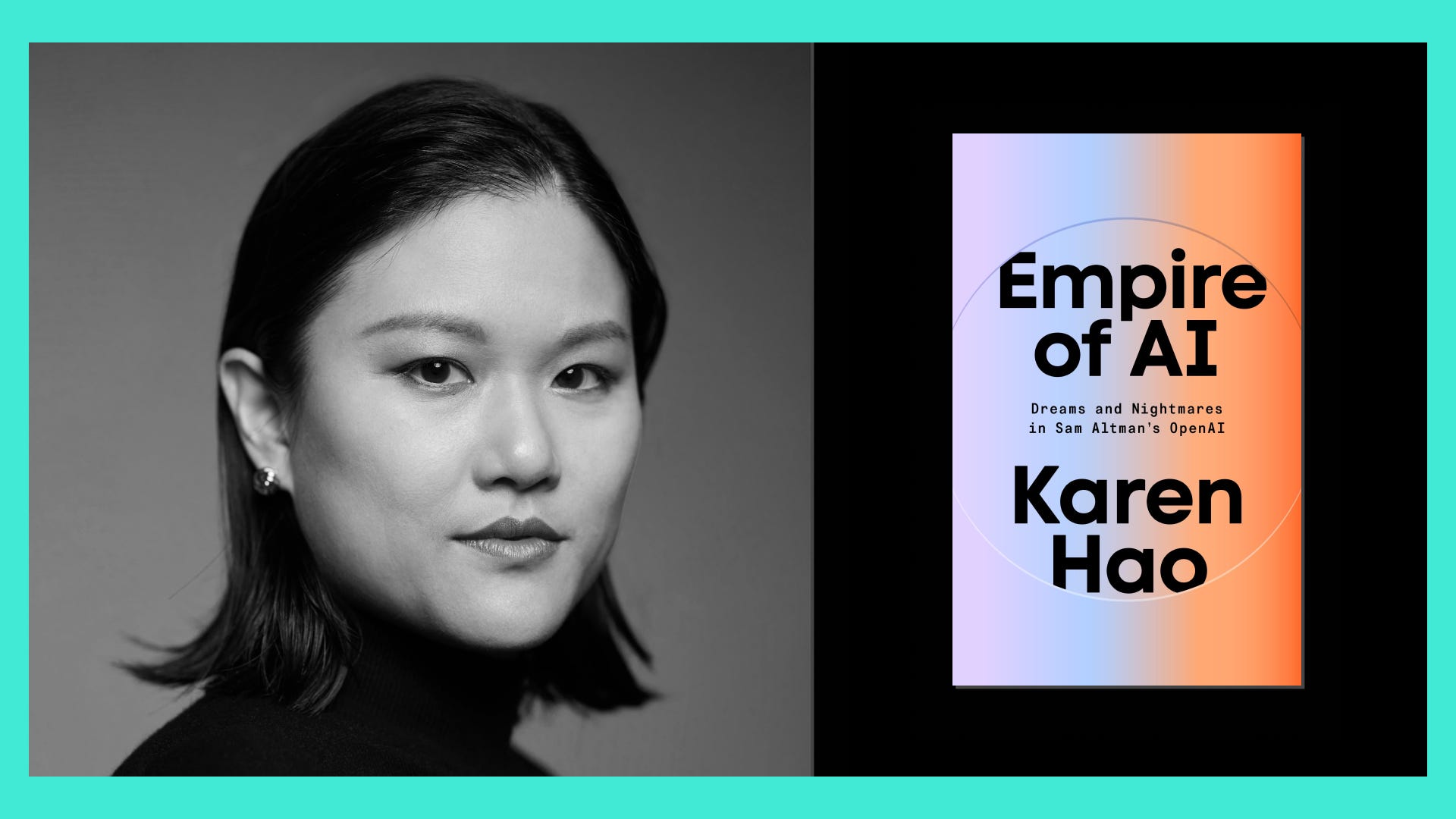
Empire of AI might look like a dense paperweight that elites of Silicon Valley use to decorate their bookshelves but it’s decidedly much more than that. In fact, this is a compulsively readable page-turner. It serves as both a primer on Artificial Intelligence and a fascinating reflection on the timeless dynamics of power—who wields it, who it corrupts, and who pays the price. It reads like a thriller as it gives the inside scoop on the early beginnings of OpenAI, the mishegoss with Musk, and the ‘Divorce’ that led to the founding of Anthropic.
By the final pages, Hao has argued the book’s title into a thesis that’s hard to ignore and much harder to refute.
“Data is the last frontier of colonization,” …The empires of old seized land from Indigenous communities and then forced them to buy it back, with new restrictive terms and services, if they wanted to regain ownership. …AI is just a land grab all over again. Big Tech likes to collect your data more or less for free—to build whatever they want to, whatever their endgame is—and then turn it around and sell it back to you as a service.”
Buy: Amazon // Bookshop
Careless People by Sarah Wynn-Williams
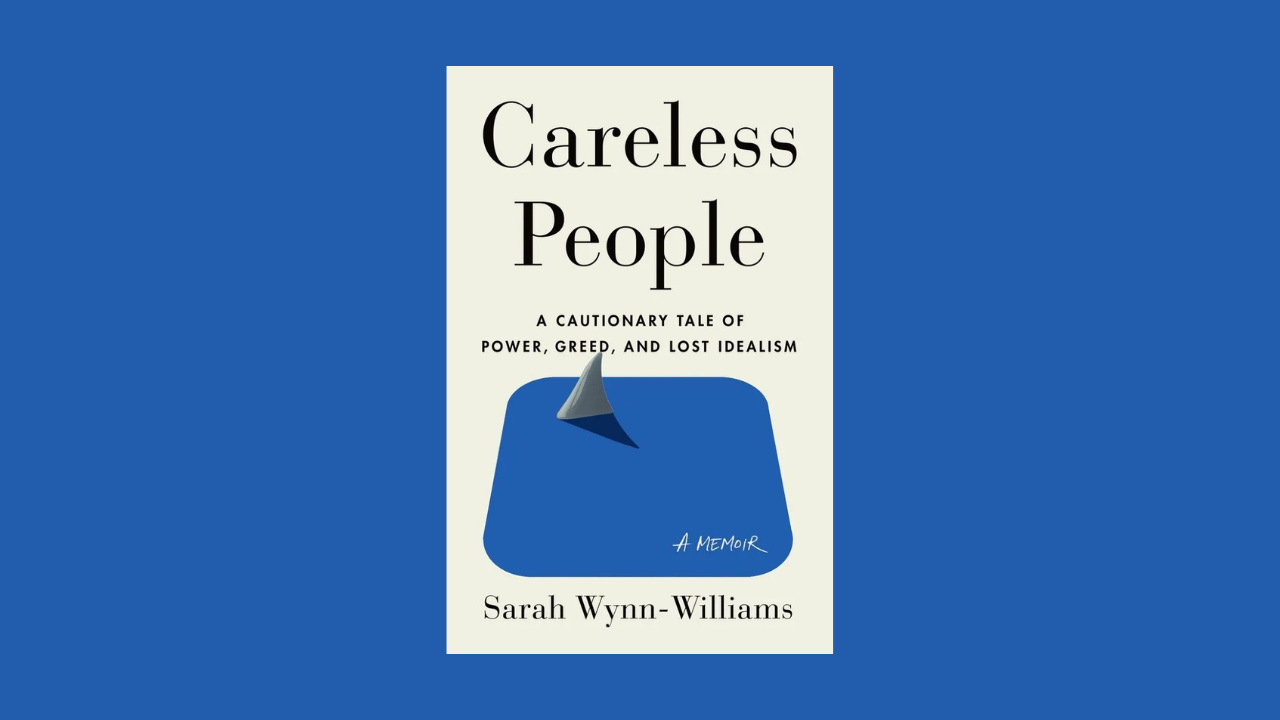
Mark Zuckerberg’s ham-fisted attempt to squash this book actually served as its unofficial publicity tour and made everybody thirstier to read it, myself included. If you’re a reader of F. Scott Fitzgerald, the title alone signals the author’s perspective: “They were careless people, Tom and Daisy—they smashed up things and creatures and then retreated back into their money.” Here’s another one that reads like fiction, thanks both to Wynn-Williams’ skill at scene-setting and the sheer insanity of the stories being told, which makes it both compulsively readable and particularly horrifying. It’s hard not to get the sense that the author is downplaying her own culpability in some of what unfolded, but you also have to give her enormous credit for standing up to the Meta machine and telling this story at all.
“My conclusion: It was just that Joel, Elliot, Sheryl, and Mark didn’t give a fuck. Joel was a veteran of George W. Bush’s White House. An issue in Syria would be met by a wave of his hand and, “Drop a bomb on it. I don’t care.” A joke, but also who he was. He was the man in charge of those countries for Facebook. And when it came to Myanmar, those people just didn’t matter to him. He couldn’t be bothered. There was no greater principle ever offered. People outside big companies sometimes wonder and speculate about how these sorts of decisions happen. This is how it happened at Facebook. And it wasn’t just Joel. None of the senior leaders—Elliot or Sheryl or Mark—thought about this enough to put in place the kinds of systems we’d need, in Myanmar or other countries. They apparently didn’t care. These were sins of omission. It wasn’t the things they did; it was the things they didn’t do.”
Buy: Amazon // Bookshop
Educated by Tara Westover
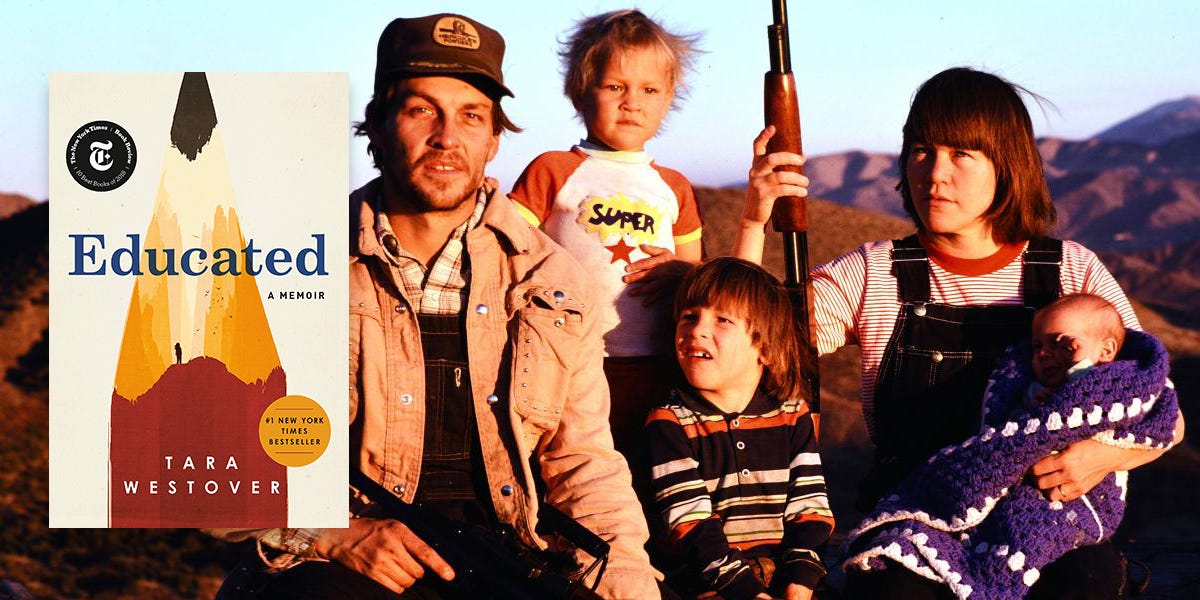
Yes, this book came out in 2018, but I’m not one to let being late to the party prevent me from attending and boy am I glad I finally showed up. As a first-gen college kid whose admission and access to elite institutions have shaped much of my life, this one was personal. I enjoyed this as a compelling underdog story, but I was fascinated because it’s actually much more than that. Westover’s relgious homeschool upbringing is definitely extreme (as it reminds me of my old-country Mexican Catholic experience), but it’s not quite the outlier it appears to be. In fact, it’s a telling window into the forces reshaping American politics today. The religious homeschooling movement that shaped Westover’s childhood in the 1980s rejected vaccines, dismissed scientific consensus, and operated outside any institutional accountability. That infrastructure has now become a pipeline into conservative government leadership, turning parental rights into a rallying cry for dismantling public institutions. What reads as one family’s dysfunction is actually a preview of the ideology now wielding power at the highest levels of government.
“I had discerned the ways in which we had been sculpted by a tradition given to us by others, a tradition of which we were either willfully or accidentally ignorant. I had begun to understand that we had lent our voices to a discourse whose sole purpose was to dehumanize and brutalize others—because nurturing that discourse was easier, because retaining power always feels like the way forward.”
Buy: Amazon // Bookshop
Grant by Ron Chernow
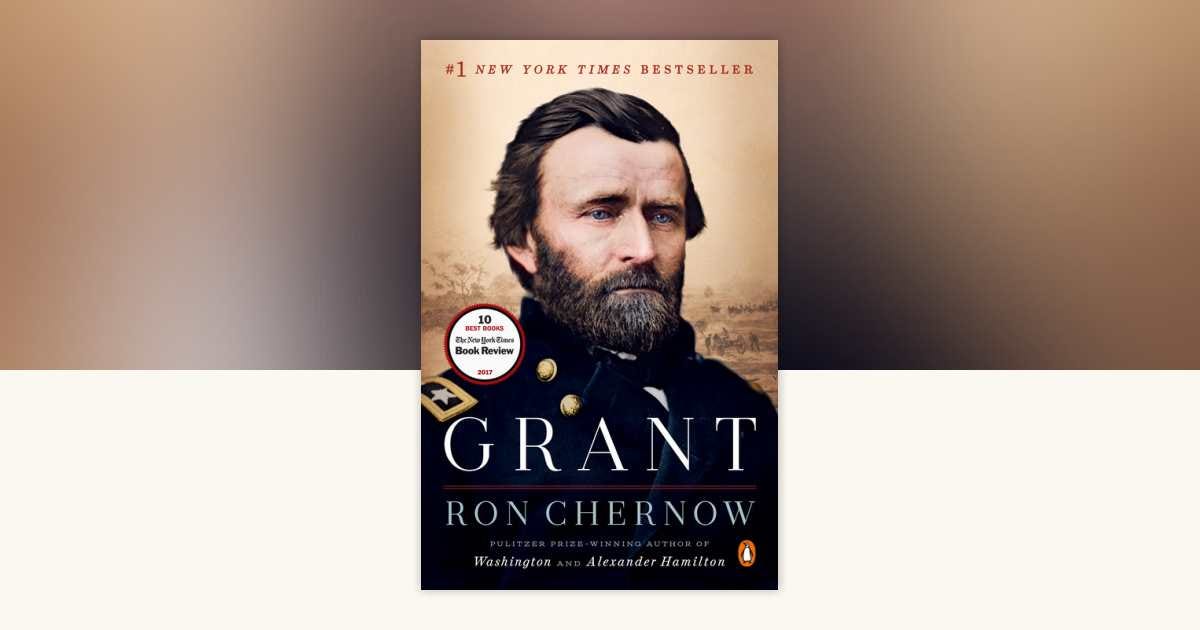
Sometimes, I wake up in the middle of the night and need to go back to sleep. I’ve counseled friends to keep a boring but important book on their Kindle for such moments.
Did I sometimes turn to this book to help me fall asleep after a long day, or in the middle of the night when I wake up and need to go back to sleep? Yes. Did I return to the pages I consumed while bleary-eyed to make sure I didn’t miss a detail? Also yes. I didn’t know much of anything about Grant before reading Chernow’s 1100 pages but it’s hard to argue with Chernow’s assertion that Grant is the most underrated president in U.S. history. What looks like ‘dad history’ turns out to be an operator’s manual for leadership under pressure:
Grant’s talent for eliminating organizational fragmentation and getting misaligned armies pulling in the same direction
His refusal to rely on hierarchy or formal authority, instead earning respect by being accessible and unpretentious,
His smashing approach to warfare, always advancing, never retreating
Of course, what’s striking about Grant is that he was, by nearly all definitions, a failure for the vast majority of his life: a failed businessman, resigned from the army in disgrace, struggling alcoholic. He had no grand ambitions. He rose to the challenges of his time and surmounted his humble beginnings, never constrained by them – as in battle, always advancing, never retreating.
He found greatness almost reluctantly, when circumstances demanded it and the stakes couldn’t be higher.
“Grant deserves an honored place in American history, second only to Lincoln for what he did for the freed slaves. He got the big issues right during his presidency even if he bungled many of the small ones. The historian Richard N. Currant who also saw Grant as the most underrated American president wrote “by backing radical reconstruction as best he could he made a greater effort to secure the constitutional rights of blacks than did any other president between Lincoln and Lyndon B. Johnson”. In the words of Frederick Douglass, “that sturdy old roman, Benjamin Butler, made the negro a contraband, Abraham Lincoln made him a free man and General Ulysses S. Grant made him a citizen”.”
Buy: Amazon // Bookshop
Moscow X, Dave McCloskey
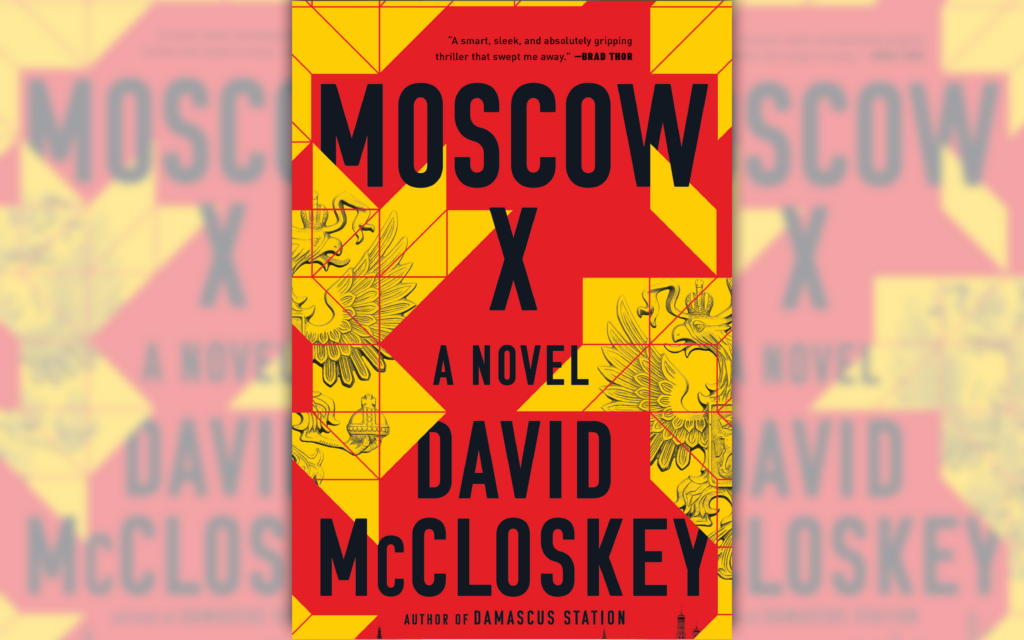
Don’t we all sort of wonder what our life as a CIA operative would have looked like? As somebody who chose a life in tech and privacy instead, Moscow X gets so much right about how surveillance actually works in the modern world. McCloskey highlights the use of cell phone data, tax records, and social media to profile and track individuals—showing just how little privacy exists when someone with resources (or a government spy apparatus) decides to look. It’s the kind of technical accuracy you’d expect from a former CIA analyst, but woven into a genuinely gripping story. Did some of it feel far-fetched? Sure. But it’s a fun spy novel to sink your teeth into, and one that understands that in 2025, intelligence work is as much about data exhaust and digital footprints as it is about dead drops and handler meetings.
“She’d come to think of Putin as many things all at once. An all-powerful Tsar and the cheerless manager of an unruly system larger than himself. A despot and an issuer of vague, sometimes ignored guidance. A new public idol and a private source of jokes and snickers… Like the rest of our country, she thought, he is proud and insecure, aggressive and pitiable, strong and weak. He was everything, he was nothing, but sometimes you had to give a damn about him as he was the center of the Russian world. The khozyain. Master. Without him the world did not spin. His existence was neither good nor bad. It just was.”
Buy: Amazon // Bookshop
Last Days of Night by Graham Moore
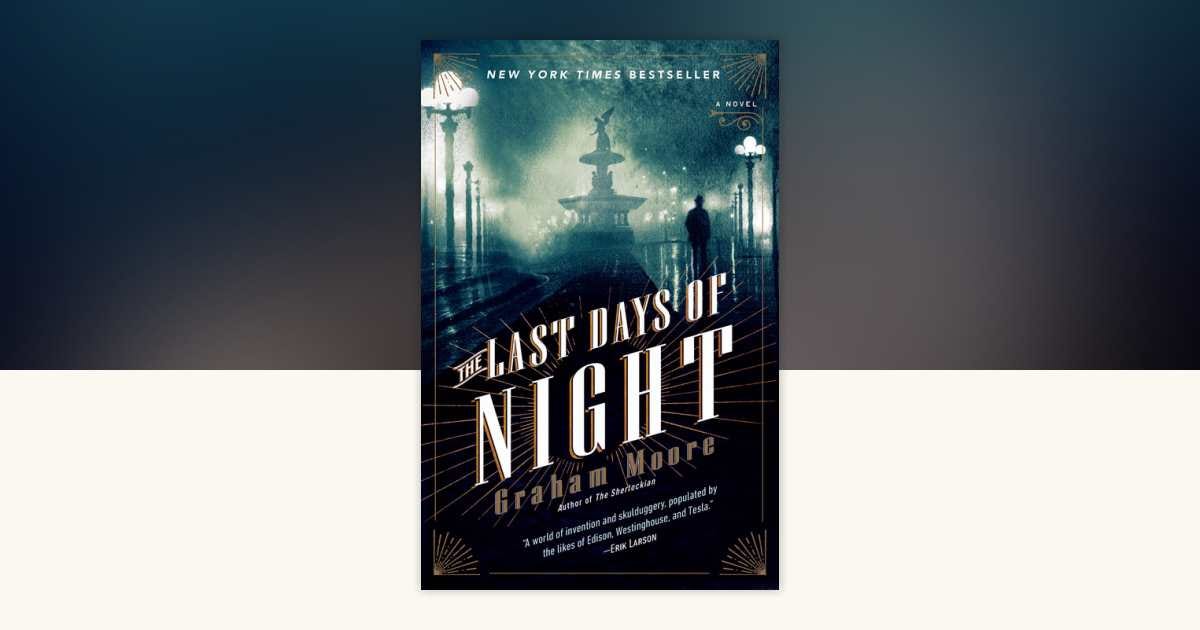
There’s a lie we all like to tell (and believe) when it comes to innovation: that brilliant new technologies come from the mind of one lone genius. Graham Moore calls bullshit. And shows us in this historical legal thriller that reality does too.
What actually moves history forward is a messy three-body problem—the visionary (Tesla), the builder (Westinghouse), and the hustler (Edison)—locked in uncomfortable tension. Set during the 1888 patent war over the light bulb, it reads like a legal thriller because it is one: young Paul Cravath (the founder of today’s law firm) defending Westinghouse in a billion-dollar IP knife fight. But zoom out and it’s Silicon Valley before hoodies—platform wars, fear-based PR, lawsuits as strategy, media manipulation to convince the public the other guy’s tech will literally kill you. Swap AC vs. DC for iOS vs. Android and you’ve got the same playbook. Moore even opens chapters with quotes from Jobs and Gates, just in case you’re dense as fuck. This story might be 137-years-old but the takeaway is as true today as it was then: Forget the lone genius myth. Innovation requires visionaries, builders, and hustlers locked in productive (and often quite messy) conflict.
“Light bulbs. Electricity. It seems likely that ours will be the last generation to ever gaze, wide-eyed, at something truly novel. That our kind will be the last to ever stare in disbelief at a man-made thing that could not possibly exist. We made wonders, boys. I only wonder how many of them are left to make.”
Buy: Amazon // Bookshop
Curious if you’ve read any of these and what your thoughts were. Curiouser still if you have your own must-reads that I should add to my 2026 stack.